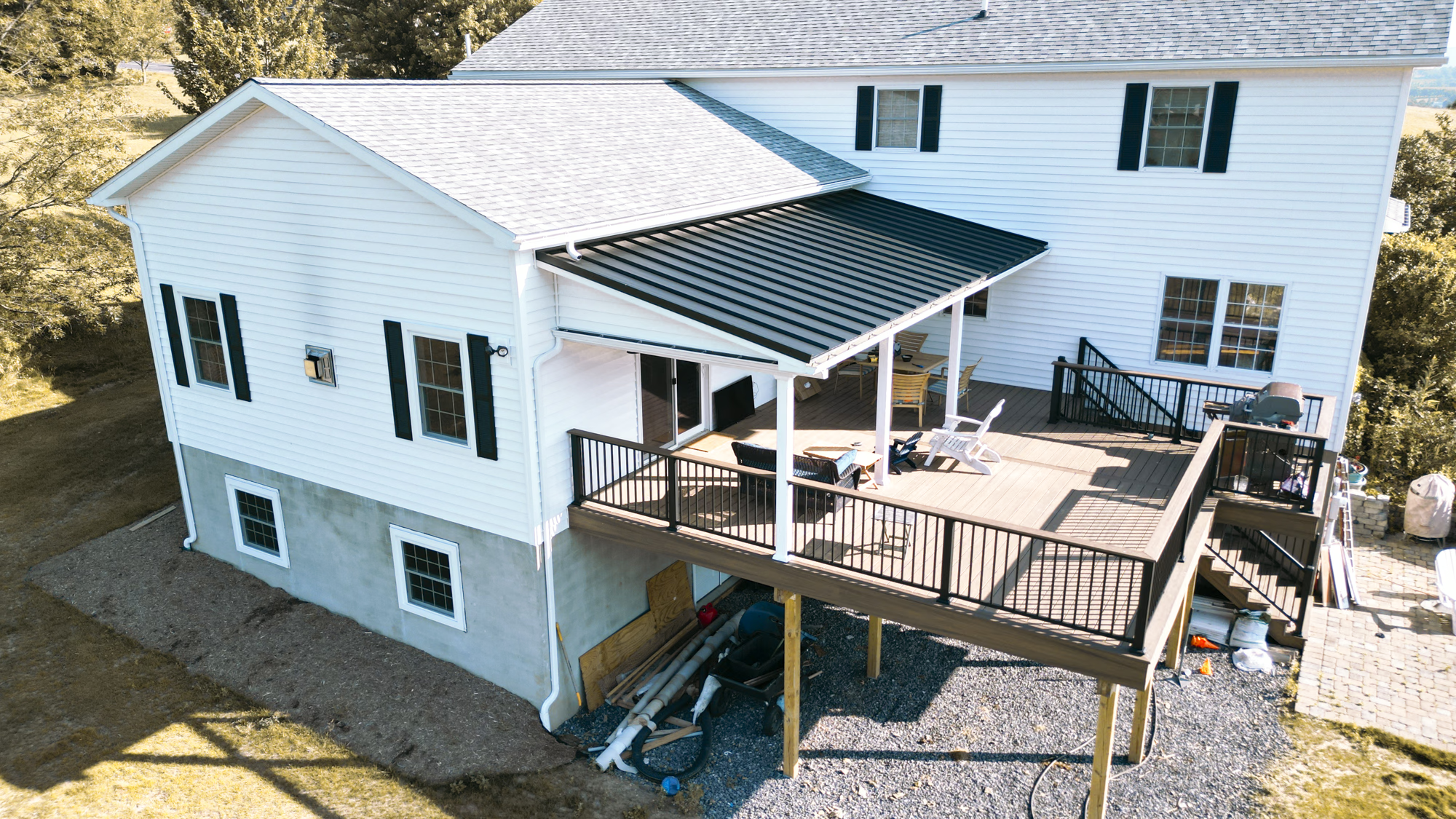
New Home vs. Building an Addition: Which Choice Is Right for Your Family?

Your family has grown, your lifestyle keeps evolving, and now your living space needs to keep up. Maybe you're dreaming of a gourmet kitchen, a main-floor primary suite, an in-law suite, or just more room for the kids to run around. And once you start running out of space, you eventually land at a pretty big crossroad: do you sell the house and build brand new, or do you stay put and build a custom addition?
Both paths can get you to a home you love. But they come with very different financial, logistical, and emotional considerations. Whether you're attached to your current neighborhood or ready for a clean slate on a new piece of land, this isn't a decision to rush into.
If you're weighing these two options right now, understanding the real cost drivers, the structural realities, and the long-term trade-offs will help you make the right call for your family and your budget.
Is an Addition Really Cheaper Per Square Foot Than a New Home?
Here's one of the most common misconceptions in residential construction: that building an addition is cheaper than building a new custom home. While the total project cost of an addition usually does come in lower than a full new build, when looking at the cost per square foot, the story flips.
1. Building a New Custom Home ($200 – $400+ per sq. ft.)
When you're starting from scratch, you get the benefit of economies of scale. Framing crews can work large, continuous exterior walls efficiently, foundation crews get open land to work with, and mechanical systems get designed clean, with no need to tie into an old electrical panel or an outdated plumbing stack.
That said, building new means factoring in site acquisition, excavation, utility hookups (well, septic, or municipal), driveways, and land prep. The structure itself is efficient to build, but the upfront capital to get out of the ground is higher.
2. Building a Home Addition ($220 – $450+ per sq. ft.)
On paper, an addition sounds like it should cost less per square foot since the foundation, roof, and main utilities already exist. In reality, additions often run higher per square foot because of the technical complexity and the surgical labor involved:
- Tie-Ins & Structural Blending: Seamlessly joining a new roofline, foundation, and siding to your existing structure takes precision framing and specialized flashing to keep water out.
- Mechanical & Electrical Upgrades: Adding 800 square feet often means upgrading your electrical service from 100 amps to 200 amps, or expanding your HVAC to handle the extra heating and cooling load.
- Selective Demolition: Before anyone can build anything new, crews have to carefully strip away parts of the existing house without tearing up everything around it.
What Are the Pros and Cons of Each Option?
To figure out which direction fits you best, it helps to just lay out the pros and cons plainly.
Option 1: Building a New Custom Home
The Pros:
- Uncompromising Customization: Every room layout, window placement, ceiling height, and detail is built around how you actually live.
- Energy Efficiency: New builds come with modern insulation, airtight envelopes, high-efficiency mechanicals, and smart home tech from day one, which means lower monthly bills.
- No Legacy Structural Defects: No hidden surprises like outdated wiring, asbestos, lead paint, or a settling foundation.
- Predictable Long-Term Maintenance: Everything from the roof shingles to the water heater is brand new and under warranty.
The Cons:
- Higher Total Upfront Investment: Beyond construction, you're covering land, site development, and closing costs.
- Location Realignment: You may be leaving your current neighborhood, changing your commute, or switching school districts.
- Longer Overall Timeline: Grading, permitting, and building from the ground up just takes more time.
Option 2: Building a Custom Home Addition
The Pros:
- You Get to Stay Put: You keep the neighborhood, the friends, and the schools your family already knows.
- Maximized Property Equity: If you're in a desirable area, adding space lets you capture equity without the cost of a move or real estate commissions.
- Lower Total Financial Outlay: The cost per square foot is higher, but the total check you write is usually smaller than a full new build.
- Targeted Transformation: You can put your whole budget toward solving the actual problem, like a cramped kitchen or a missing primary suite.
The Cons:
- Construction Disruption: Living in a home during active construction can get noisy, dusty, and invasive.
- Architectural & Zoning Restrictions: Your design is limited by your existing floor plan, lot lines, and local setbacks.
- Risk of Unforeseen Existing Conditions: Opening up older walls often reveals rot, bad wiring, or foundation issues that need to be brought up to code.
What Should You Actually Weigh Before Deciding?
When we sit down with homeowners at this crossroad, there are four things we always tell them to think through first (see why we chose our name?).
1. What does your lot actually allow?
Every municipality has its own zoning rules around lot coverage, setbacks, height limits, and stormwater management. Before you fall in love with a 1,000-square-foot second-story addition, you need to know whether your lot even allows for it. If your lot won't budge, building new on a bigger parcel might be your only real path to more space.
2. Is there an "equity ceiling" in your neighborhood?
Take a look at what homes around you are actually worth. If the average home on your street is $450,000 and you sink $250,000 into an addition, you could be pushing your home's value past $700,000. Being the most expensive house on the block by a wide margin can make it hard to recoup that investment down the road. If your space needs outgrow what your neighborhood supports financially, moving and building new is usually the smarter play.
3. How solid is your current home, really?
An addition is only as good as the structure it's attached to. If your home has a settling foundation, an aging roof, low basement ceilings, or outdated plumbing, a good chunk of your budget is going to go toward fixing those legacy issues instead of building new space. A solid inspection will tell you whether your house is a good candidate for an addition in the first place.
4. How much disruption can your daily life handle?
Think about what construction actually looks like day-to-day. An addition means living in an active job site for months: dust barriers, temporary utility shutdowns, and crews on-site every day. If that sounds like more chaos than your family wants to deal with, building new lets you stay comfortably where you are until the day you get the keys to the new place.
So, Which One Is Right for You?
Deciding between a new custom home or expanding your current one isn't just a financial decision; it's an investment in your family's day-to-day life for years to come. An addition lets you fall back in love with the house you already have while keeping the neighborhood connections you've built. Building new gives you a blank canvas and complete creative freedom to build a home made specifically for how your family lives.
At Crossroads Construction, we believe in taking the guesswork out of decisions like this. With over two decades of experience serving North Central Pennsylvania, we bring honest guidance, transparent fixed pricing, and a design/build approach that keeps you in the loop from start to finish.
Whether you're ready to expand your current space or build your dream home from bare ground, reach out to Crossroads Construction and let's talk through what makes sense for your family.
With over 25 years of construction experience with high end home renovations and builds, combined with a strong work ethic and meticulous attention to detail, Crossroads Construction is prepared to do what it takes to help you improve your living space, whether that means an extensive home remodel or starting fresh from bare ground. Our team has been helping homeowners in Central PA design and build space they are proud of, and we are excited to do the same for you.